The Central Texas Relocation Playbook
The Central Texas Relocation Playbook
The stuff your out-of-state Google search won't tell you. Written by a guy who actually lives here, sells here, and will tell you the parts that suck.
Section 01
Why Central Texas (The Honest Version)
You already know the brochure version. Hill Country sunsets, barbecue, no state income tax, something about cowboys. Cool. Let me tell you what actually matters if you're picking up your whole life and dropping it here.
Central Texas is a big region — San Antonio, Austin, San Marcos, New Braunfels, and a bunch of smaller towns in between. The whole corridor sits in this weird sweet spot where you get genuine small-town feel with big-city access when you need it. My corner of it is New Braunfels, right in the middle of the I-35 corridor. San Antonio is 30 minutes south. Austin is 45 minutes north (in theory, anyway... add 20 minutes for construction and the guy doing 55 in the left lane. DON'T BE THAT GUY!!!!). You are not "in the middle of nowhere." You are in the middle of everything, and you can still leave your front door unlocked without thinking twice about it. Try doing that in LA.
The Real Reasons People Stay
Cost of living that doesn't require a second mortgage on your soul. If you're coming from the West Coast or the Northeast, you're going to feel rich for about six months. Your dollar goes further here. Not infinitely further. But noticeably. A house that would cost you $900K in Salt Lake or $1.2M in LA is going to land in the $400K to $550K range in most of the New Braunfels area. That's not a typo.
Schools that families actually move for. Comal & New Braunfels ISD has earned a B rating from the Texas Education Agency three years running, with scores trending up each year. And it's not just test scores. The athletics are competitive, the facilities are modern, and parents are involved because they chose to be here. That's a big deal when half your neighborhood relocated specifically for the schools.
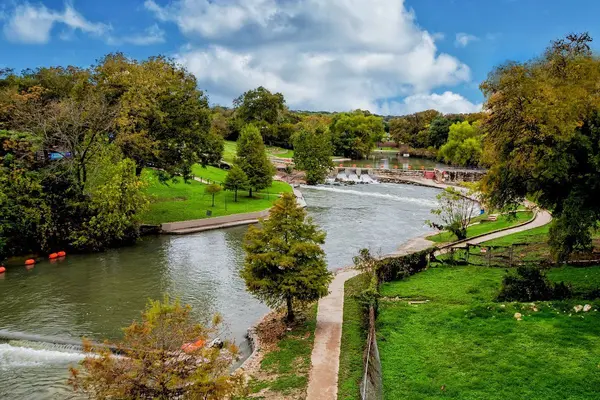
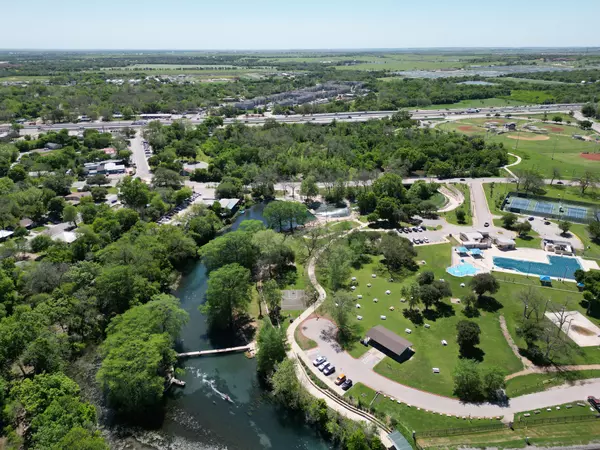
Outdoor access that isn't a two-hour drive. The Guadalupe River runs right through town. Canyon Lake is 20 minutes away and is currently full — a dramatic turnaround from when it dropped to around 40% capacity not that long ago. Landa Park, Dry Comal Creek, tubing, kayaking, hiking. You're not waiting for the weekend to get outside. You're getting outside on a Tuesday after work because it's right there.
The Stuff Nobody Puts on the Brochure
The heat is real. If you are not prepared for 100+ degree days from June through September, you need to recalibrate your expectations. This is not a dry heat. The humidity rolls up from the Gulf and sits on you like a weighted blanket you didn't ask for. You'll adapt. But the first summer will test your commitment.
Growth is not slowing down. New Braunfels has been one of the fastest-growing cities in the U.S. for years. That means construction everywhere, traffic getting worse on I-35, and a community that's actively wrestling with how fast is too fast. Some longtime locals are frustrated. Newcomers sometimes feel the friction. It's real, and pretending it doesn't exist would be dishonest.
You will miss some things. If you're from a major metro, the restaurant scene is solid but not deep. You're not getting the same variety of ethnic food you had in Seattle or LA. The nightlife is Gruene Hall and a handful of good bars, not a club district. If you need that energy, San Antonio and Austin are right there. But if you're moving here expecting Manhattan with cowboy boots, you're going to be disappointed. Move here for what it is, not what you wish it was.
Section 02
The Money Truth
This is where most relocation guides turn into a pep rally. Not this one. Let me walk you through the real numbers so you don't show up surprised.
Property Taxes Will Hit Different
Texas has no state income tax. You already knew that. What your buddy from Dallas didn't mention is that the property taxes make up for it. Hard.
Here's the breakdown for the New Braunfels area:
- City of New Braunfels tax rate: $0.4156 per $100 of taxable value (FY2027, first increase in three years). On an average Comal County homestead, that works out to roughly $1,295/year just for the city portion.
- Comal County tax rate: $0.3050 per $100 of taxable value (FY2027, held flat from the prior year).
- Comal ISD, MUD districts, and other taxing entities stack on top of that.
Does that sting? Sure. But run the math against your current state income tax plus your current property tax plus your current home price. For most people leaving California, Utah, or Washington, the total tax burden still comes out lower in Texas. It just shows up in a different line item, and the sticker shock hits harder because you see it all on one bill instead of spread across your paycheck.
The Homestead Exemption Is Your Best Friend
The moment you close on a primary residence in Texas, file your homestead exemption. Do it the same week. This locks in a cap on how much your assessed value can increase each year (currently 10% max for most properties). It also knocks a chunk off your school district taxes. If you forget to file, you are literally giving the county free money. Don't do that.
What Homes Actually Cost Right Now
As of late 2026, here's the honest range in the New Braunfels area:
- Entry-level new construction: $230K to $380K. These are your Voss Farms, starter-level Meritage builds. Perfectly good homes, just don't expect granite and hardwood on everything at that price.
- Move-up / Forever Home range: $380K to $600K. This is where most relocating families land. Mayfair, parts of Veramendi, Lark Canyon. Solid square footage, modern finishes, Comal ISD schools.
- Premium / Established neighborhoods: $600K to $1M+. River Chase, upper Veramendi, custom builds. Bigger lots, mature trees, river access in some cases.
If you're coming from a market where $600K buys a two-bedroom condo, you're about to feel like you won the lottery. If you're coming from the Midwest where $250K gets you a four-bedroom ranch, the sticker shock might go the other direction. Central Texas is affordable relative to coastal markets, but it's not cheap relative to the rest of Texas. Know the difference.
Insurance, HOAs, and the Stuff That Sneaks Up on You
Homeowners insurance in Texas is higher than the national average. Hail, wind, foundation movement from expansive clay soil. Insurance companies know all about it. Budget $2,500 to $4,500 a year depending on the home and coverage level.
HOA fees in master-planned communities typically run $50 to $150 a month. Some neighborhoods are higher if they have pools, splash pads, fitness centers, or trail systems. Read the CC&Rs before you sign. If you hate being told what color to paint your front door, steer toward older neighborhoods with less restrictive covenants.
MUD taxes deserve their own line because they catch people off guard. Some newer developments sit in Municipal Utility Districts, which levy an additional tax to pay for water, sewer, and drainage infrastructure. This can add 50 cents or more per $100 of value on top of your other taxes. Always ask. Always check. This is the single most common "I wish someone had told me" moment for relocated buyers.
Section 03
Picking Your Area
Central Texas is a big region with a lot of personality crammed into it. Before we zoom into specific neighborhoods, here's the lay of the land — the cities and towns you'll actually be choosing between, and what each one feels like on the ground.
San Antonio
The big city in the corridor. Military bases (Lackland, Fort Sam, Randolph), a massive healthcare sector, the Riverwalk, the Spurs, and a food scene that punches well above its weight, especially if you like Mexican food done right!!!!!!! Cost of living is lower than Austin by a wide margin. The tradeoff is that San Antonio sprawls, and your commute can get ugly fast depending on which side of town you land on. If you want big-city amenities without big-city prices, SA delivers. If you want small-town feel, keep looking.
Austin
The tech hub. The live music capital. The city everyone's heard of. Austin has jobs, energy, culture, and a cost of living that's climbed hard in the last five years. If you're relocating for a tech job, Austin proper or the northern suburbs might make sense. But a lot of people who work in Austin are choosing to live south of it in San Marcos, Kyle, Lockhart (I lived here for 15 years, nice small town) or New Braunfels because the dollar goes further and the pace of life is slower. Austin is a great city to have 45 minutes away. Living in it is a different conversation. I may be bias, I'm a country boy.
New Braunfels
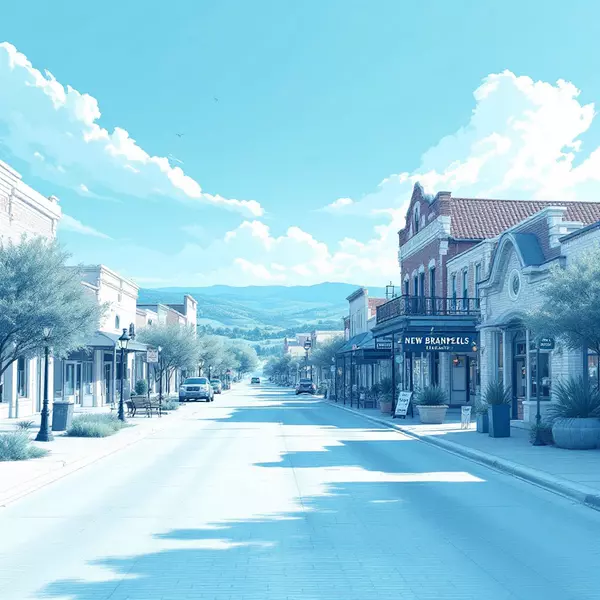
This is where I live, sell, and know every street. New Braunfels sits right between San Antonio and Austin on I-35, and it's been one of the fastest-growing cities in the country for years. German heritage, the Guadalupe River, Gruene Hall, Schlitterbahn, and a downtown that still has actual character. New Braunfels and Comal ISD are strong (B-rated, 87/100 from TEA). The growth is real and so is the construction, it's not the sleepy town it was ten years ago, but it's still a place where people know their neighbors. This is where the neighborhood deep-dives below are focused.
San Marcos
College town (Texas State University) with a younger vibe and lower price points than NB or Austin. The outlet malls pull shoppers from all over, and the San Marcos River is one of the most beautiful spring-fed rivers in the state. If you're looking for affordability and don't mind the college-town energy, San Marcos has real value. The flip side: it can feel transient in the rental-heavy areas near campus, and the infrastructure hasn't fully caught up to the growth.
Canyon Lake
Not technically a city — it's an unincorporated community built around the lake. Canyon Lake is where you go if you want water access, Hill Country views, and a slower pace. The lake is currently full, which is a dramatic turnaround from when it dropped to around 40% or lower capacity. Lots are bigger out here, prices vary wildly depending on water proximity, and you're trading convenience for scenery. Grocery runs and errands mean a drive into NB or Wimberley. If that tradeoff sounds like freedom instead of inconvenience, Canyon Lake might be your spot.
Seguin
Seguin is the value play that most relocation guides skip entirely, it's that sleeper pick in fantasy football. It's a smaller town east of New Braunfels with significantly lower home prices and a blue-collar, no-nonsense feel. Caterpillar and Continental have manufacturing plants here, with more on the way!! So there's a real employment base beyond just being a bedroom community. The tradeoff is fewer amenities, a less polished downtown, and schools that don't carry the same reputation as Comal or New Braunfels ISD. You still have quick access to San Antonio, New Braunfels and Austin. If your budget is tight and you don't need to be in the middle of everything, Seguin deserves a look.
Bulverde
Hill Country living without going full rural. Bulverde sits north of San Antonio along Highway 281, and it's where people go when they want land, privacy, and elbow room but still want to be within striking distance of everything. Comal ISD covers parts of Bulverde, which is a big draw for families. It's growing fast, new retail and restaurants are popping up along 281 but it still feels like country. If your idea of a good evening is sitting on your back porch watching deer cross your property, Bulverde gets it.
Fredericksburg
Wine country. German heritage dialed up to eleven. Fredericksburg is the Hill Country postcard, Main Street shopping, wineries, peach orchards, and weekend tourists from Austin and San Antonio. It's beautiful and it knows it. The catch: it's an hour-plus from any major city, the job market is mostly tourism and agriculture, and home prices have spiked because of the vacation-rental boom. If you work remotely and want to live in one of the prettiest small towns in Texas, Fredericksburg is hard to beat. If you need to commute anywhere, the math gets harder fast.
Zooming In: New Braunfels Neighborhoods
Now let's get specific. Not all of New Braunfels is the same, the neighborhood you choose shapes your commute, your tax bill, your school zone, and whether you have a Starbucks five minutes away or have to drive 20 minutes for decent coffee. Here's the honest breakdown.
Mayfair
This is where I send most relocating families, and for good reason. Newer construction from builders like David Weekley, Coventry, Meritage, and Highland. The value per square foot is hard to beat in this market. Comal ISD schools. Community pool. Walking trails. Close to retail and restaurants on FM 306 and Loop 337.
The honest flaw: It's a big, busy master-planned community, and it feels like one. If you want charm, character, or mature oak trees in your front yard, this is not your spot. The lots are tighter than some people expect, especially coming from states where a half-acre is standard. But if you want a modern, well-built home in a good school district at a competitive price, Mayfair deserves a hard look.
Veramendi
Master-planned with an upscale vibe. The centerpiece is a walkable town center that's still being built out. Bigger lots than Mayfair on average, with more architectural variety in the higher price tiers. Strong Comal ISD zoning.
The honest flaw: The town center is still "coming soon" in parts. Some of the retail and restaurant space that makes the walkability promise real hasn't materialized yet. You're buying into a vision that's partially delivered. The homes themselves are great, but don't move here specifically for the walkable lifestyle unless you've confirmed what's actually open versus what's on the site plan.
Voss Farms
The most underrated neighborhood in New Braunfels, and I'll fight anyone who disagrees. This is where buyers on a tighter budget get into New Braunfels ISD without sacrificing build quality. Solid entry-level and mid-range homes. Community amenities. Good bones.
The honest flaw: Location. It sits on the southern end of New Braunfels, which means your commute to Austin is longer and the drive to some of the trendier parts of town adds 10 to 15 minutes. If your life centers around the FM 306 corridor or Gruene, Voss Farms might feel farther out than you'd like. But for the price? Worth the drive.
River Chase
My personal favorite, If you want land, privacy, and river access, this is the neighborhood. Large lots (some over an acre), established trees, and direct access to the Guadalupe River in the community. This is where New Braunfels starts to feel like proper Hill Country living. The homes here range from solid family houses to straight-up custom estates.
The honest flaw: Price of entry is high, and the older sections have homes that might need updating. There are 2 sides, the river side, larger lots 1-5 or even more acres, older homes in general. And then there is the "pool side" this side of the community are usually right around 1 acre lots and newer homes, with the ammenity center being on this side. You do get access to both the ammenity center and the river park for either side and for only $300 a year!!
The Hill / Inside the Loop
This is Old New Braunfels. Character homes on established streets, walkable proximity to Gruene and downtown. If you want to ride your bike to Gruene Hall on a Saturday night and stumble home, this is your move. No two houses look the same. Mature landscaping. The kind of neighborhood where people wave from their porch.
The honest flaw: Older homes mean older plumbing, older electrical, older foundations. Inspection reports in this area tend to be longer and more colorful than in new construction. Budget for repairs that new-construction buyers don't think about. The charm costs maintenance.
Lark Canyon
A newer Meritage Homes community that's still building out. Good mid-range option with modern floorplans, energy-efficient builds, and New Braunfels ISD zoning, probably your cheapest option to get into New Braunfels High School. It sits between the affordability of Voss Farms and the polish of Mayfair.
The honest flaw: It's new enough that the community identity is still forming. You're surrounded by active construction on some streets. If you need a "finished" neighborhood feel on move-in day, that's not here yet. But if you're comfortable with a neighborhood that's growing alongside you, the value is strong.
Section 04
The New Construction Reality
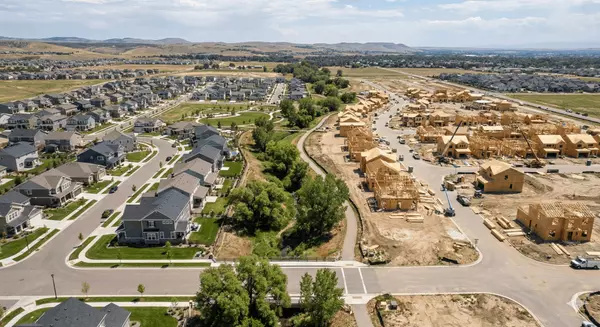
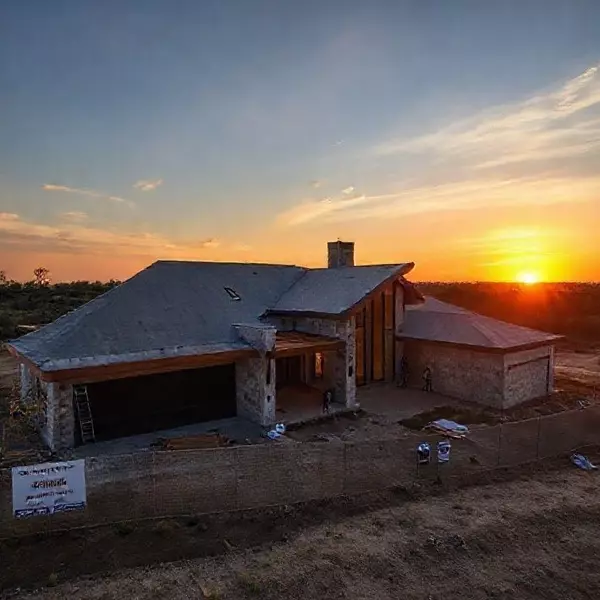
Half the homes selling in the New Braunfels area right now are new construction. If you're relocating from out of state, there's a decent chance you'll end up in one. Here's what nobody tells you until it's too late.
The Builder Has a Sales Agent. That Agent Works for the Builder.
When you walk into a model home and the friendly person behind the desk starts showing you floorplans, they are not your agent. They work for the builder. Their job is to sell you the builder's product at the builder's price with the builder's preferred lender and the builder's timeline. They're often perfectly nice people. They are also literally paid to represent the other side of your transaction.
Get your own agent. (..... preferably me.......)A buyer's agent costs you nothing extra on new construction in Texas. The builder has already baked that commission into the price whether you bring an agent or not. If you don't bring one, the builder gets more money. You don't save a dime. You just lose your representation. There is no logical reason not to have someone in your corner.
Base Price Is a Starting Point, Not a Final Number
That floorplan they showed you starting at $349,900? By the time you pick your lot premium, structural options (extra bedroom, covered patio, extended garage), and design center upgrades (cabinets, countertops, flooring, fixtures), you're at $400K+ and wondering what happened.
This is not a scam. It's just how new construction pricing works. But you need to go in with eyes open. Ask for a full breakdown of lot premiums, structural upgrades, and design center averages before you fall in love with a base price that doesn't include anything you actually want.
The Lender Incentive Trap
Builders will offer you $10,000, $15,000, sometimes $25,000+ in closing cost credits or rate buydowns. Sounds incredible. But those incentives almost always require you to use the builder's preferred lender. Here's the move: get a quote from an outside lender first. Then let the builder's lender compete. Most of the time the builder's deal is legitimately better with the incentives factored in. Sometimes it's not. The only way to know is to compare.
Construction Timelines Are Suggestions
The builder says 6 months. Budget for 8 to 10. Supply chain disruptions, permit delays, subcontractor scheduling, weather. If you're relocating with a lease expiration or a home sale closing on a hard date, build in a buffer. Short-term rental, extended-stay hotel, a very patient friend with a guest room. Do not bet your housing on a builder's estimated completion date. You will lose that bet more often than you win it.
The Warranty Is Not a Blank Check
New construction comes with a builder warranty, typically 1 year on workmanship, 2 years on mechanical systems, 10 years on structural. Sounds great on paper. In practice, getting warranty items addressed requires documentation, persistence, and sometimes a firm but polite email chain. Document everything from day one. Take photos during construction if they'll let you. Get a third-party home inspection even on new construction. Yes, even on new construction. The inspector will find things. They always find things.
Section 05
The Process from Out of State
Buying a home from 1,000 miles away is not the same as buying one across town. Here's the actual sequence of events, stripped of the usual "it's easy, just call us!" nonsense.
Step 1: Get Pre-Approved Before You Do Anything Else
Not pre-qualified. Pre-approved. Preferable with a local lender who actually underwrites Texas transactions!!! VA buyers: find a lender who does VA loans in Texas every week, not one who "can do them." There's a difference, and you'll feel it at the closing table. Your pre-approval letter is your credibility. Without it, you're just a tourist looking at houses on the internet.
Step 2: Find Your Agent Before You Find Your House
If you walk into a model home or an open house without an agent, the person standing there represent the seller. This applies to new construction and resale. Find someone who knows the specific neighborhoods you're considering, not just someone with a license and a pulse. Ask them what they think is wrong with the area you're looking at. If they can't name a single honest drawback, keep looking for an agent who will. ....Cough...ME!!!
Step 3: Do a Virtual Deep Dive First
Your agent should be able to do video walkthroughs, FaceTime tours, and send you content that goes beyond the MLS photos. Google Maps Street View is your friend. Drive the commute route virtually at 8 AM and 5 PM. Look at the surrounding development. Check the flood maps. Read the HOA documents before the trip, not during. Your in-person visit should be a confirmation trip, not a discovery trip. You should already know your top three neighborhoods and have a short list of properties before your boots hit Texas soil.
Step 4: Plan the Scouting Trip Strategically
I have sold homes that the buyer never saw the house until the day of closing, they did have family that saw it. This is a big commitment you probably want to see it first. Two to three days minimum. Come on a weekday if you can, because that's when you'll see the real traffic, the real noise levels, and the real vibe of a neighborhood. Saturday open houses feel different than a Tuesday afternoon. Drive the school route. Hit the grocery store. Eat at a restaurant that's not on the tourist strip. You're not visiting. You're auditioning a place to live for the next decade.
Step 5: Write the Offer from Wherever You Are
Texas real estate contracts are standardized (TREC forms), and everything can be signed electronically. You do not need to be physically present to make an offer, negotiate, or even close. Remote closings with a mobile notary are common and straightforward. Your agent handles the coordination. Your title company handles the wire. You sign a stack of PDFs and suddenly you own a house in Texas.
Step 6: The Closing and Beyond
Typical closing timeline in Texas is 30 to 45 days from executed contract. Some cash deals close faster. Some VA loans take longer. Your agent should give you a realistic timeline for your specific loan type and situation, not a best-case fantasy.
After closing: file your homestead exemption immediately. Set up your utilities. Register your vehicle within 30 days (Texas requires it). And for the love of everything, get a Texas driver's license within 90 days so you stop getting side-eye at the HEB checkout when your out-of-state ID comes out.
And if you're wondering whether it helps to have someone local who actually answers their phone, knows the builders personally, and will tell you the truth about a neighborhood instead of just whatever closes the deal fastest... well, keep reading. 😊
Section 06
Your Next Step
Ready to Talk?
No pressure. No sales pitch. Just a straight conversation about whether Central Texas is actually the right move for you and your family. If it's not, I'll tell you that too.
Joe Hurd
830.580.3667
Categories
Recent Posts